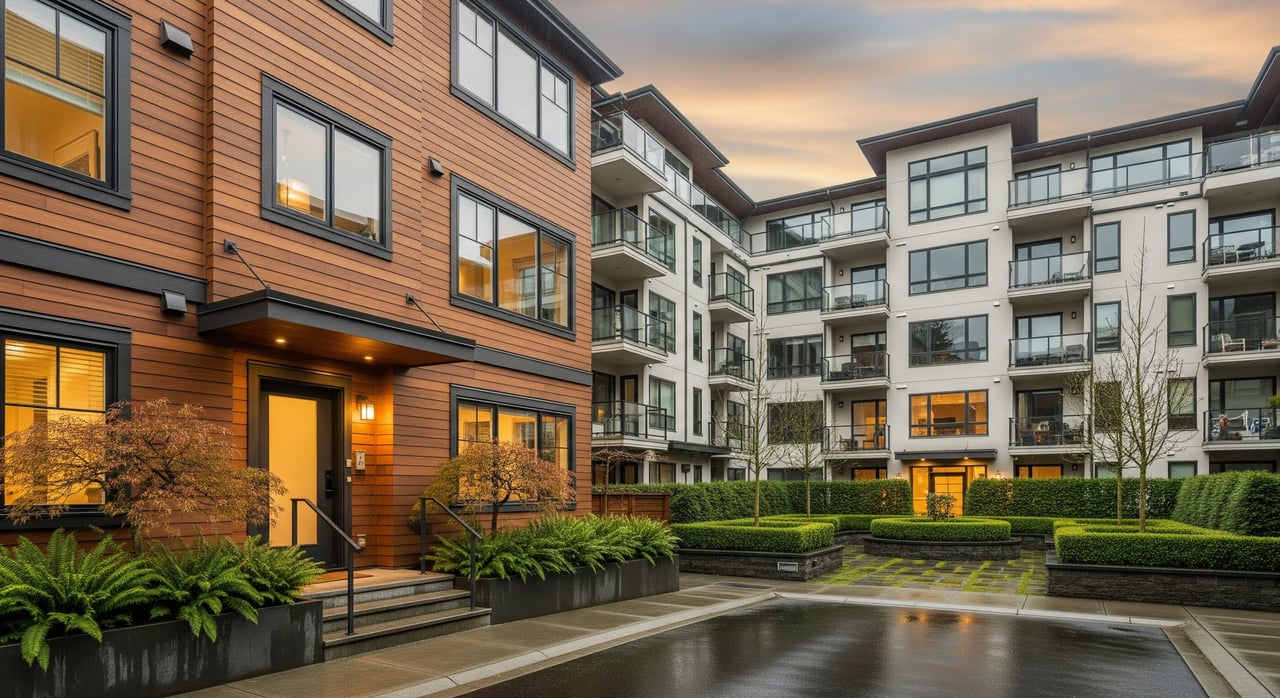
Trying to choose between a townhome and a condo in Bothell? The right choice can affect your monthly payment, maintenance to-do list, and long-term flexibility. If you are a first-time buyer or seeking the most value for your budget, it helps to understand how each option works in Washington State and what to watch for in local HOAs. In this guide, you will learn the key differences in ownership, HOA fees, maintenance, financing, and resale so you can buy with confidence in Bothell. Let’s dive in.
Condo vs. townhome basics in Bothell
In Washington, a condominium is a legal form of ownership. You own the interior of your unit and share ownership of common elements through the association. Condominiums are governed by the Washington Condominium Act and follow recorded documents that define what you own and what the HOA maintains.
A townhome in the Seattle area can mean two different things. Some townhomes are legally condos, and others are fee-simple homes on their own lots in a planned community. The buildings may look similar, but the ownership and responsibilities can be very different.
What you legally own
- Condo: You typically own the interior of the unit and an undivided interest in common areas like roofs, siding, hallways, and landscaping. The HOA manages most exterior items and shared systems.
- Fee-simple townhome: You may own the structure and the land beneath it. The HOA may maintain shared landscaping or roads, but exterior repairs can be your responsibility. The exact duties depend on the recorded covenants and plat.
This difference affects financing, insurance, taxes, and resale. Two attached homes on the same street can have very different obligations because of how they were recorded.
How to confirm ownership type
Before you write an offer, verify whether the home is a condominium unit or a fee-simple lot. Check the deed and the King County parcel record. The county records will show if the property is a condo interest or a separate parcel, which helps you understand taxes, insurance, and maintenance duties.
HOA governance and fees
Homeowners associations are not all the same. In Bothell, you will see a range of HOA sizes and management styles, from professional management to self-managed boards. Your goal is to understand what the HOA covers, how healthy the finances are, and how the rules fit your lifestyle.
What dues usually include
- Condos: Dues often cover exterior building maintenance, common area upkeep, master insurance for the structure, and sometimes utilities like water, sewer, and trash. Buildings with elevators or extensive amenities tend to have higher dues.
- Townhomes: Dues can be lower if owners handle exterior maintenance, though some townhome HOAs cover landscaping, private roads, snow removal, and limited exterior work. Gated or amenity-rich communities can have dues similar to condos.
In the greater Seattle area, many condo dues fall in the mid-hundreds per month, with amenity-rich or elevator buildings running higher. Townhome dues are often lower to mid-hundreds when owners handle more maintenance. Actual numbers vary by property, age, amenities, and insurance costs.
Reading HOA health
Ask for and review the following before you commit:
- CC&Rs, bylaws, and rules
- Current budget, recent financials, and the reserve study
- Meeting minutes for the last 12 to 24 months
- Insurance summary and proof of master coverage
- Notices of special assessments, litigation, and owner delinquency rates
For older communities, pay close attention to reserves and recent capital projects. In King County, some older HOAs have deferred maintenance. A solid reserve study and clear plan for roofs, siding, and major systems can help you avoid surprise assessments.
Maintenance and insurance responsibilities
Your day-to-day maintenance will depend on the legal form and HOA scope.
- Condos: The HOA typically maintains the building exterior and common systems. You carry an HO-6 policy for your interior, personal property, and improvements. Adding loss assessment coverage can protect you if the HOA shares costs for a major claim.
- Fee-simple townhomes: You may be responsible for the roof, siding, deck, fencing, and driveway, unless the HOA documents say otherwise. You carry a standard homeowner’s policy that covers the structure and lot. HOA insurance may only cover common areas.
If you prefer less exterior upkeep and predictable tasks, a condo may fit. If you want more control over your exterior and possibly a garage or small yard, a townhome could be the better match.
Financing: warrantable vs. non-warrantable
Financing is one of the biggest differences in attached housing. Lenders classify projects as warrantable or non-warrantable based on agency guidelines.
- Warrantable: The condo or townhome project meets Fannie Mae and Freddie Mac standards. Conventional loans are usually available, and FHA or VA loans may be possible if the project has the needed approvals.
- Non-warrantable: The project does not meet one or more standards. Common triggers include high investor concentration, pending litigation, inadequate reserves, or substantial deferred maintenance. Financing options are more limited and may require larger down payments or higher rates through portfolio products.
If you plan to use FHA or VA financing, confirm whether the project appears on the applicable approval lists or meets current review options. Lender interpretations can vary, so start the conversation early. Ask your lender and your agent to verify project eligibility as soon as you are serious about a property.
Resale and rental considerations
Resale strength depends on project health, documentation, and location. Condos with litigation, poor reserves, or heavy investor ratios can be harder to sell because fewer buyers can finance them. Fee-simple townhomes often compare more closely to single-family homes, which can broaden your buyer pool.
Many HOAs have rental caps or short-term rental restrictions. If you might rent later, review rental policies and obtain data on owner-occupied versus investor-owned units. Clear rules and good documentation typically support stronger marketability in Bothell.
Bothell price bands: what to expect
Prices move with the market, so use current local data when you shop. In Bothell, you will generally see three bands when comparing attached homes:
- Entry level: Often studios or one-bedroom condos, plus some smaller two-bed condos in older or less central buildings. HOA dues can feel higher relative to the price if the building has elevators or centralized utilities.
- Middle band: Newer two-bed condos with better finishes or two- to three-bed townhomes with garages. Monthly dues and total housing cost vary based on maintenance responsibilities and amenities.
- Upper band: Larger townhomes or high-amenity condos, sometimes new construction with premium features. Prices reflect square footage, parking, and community offerings.
For apples-to-apples comparisons, look at price per finished square foot, HOA dues per month, and what those dues include. Also note days on market, rental caps, and whether the project is warrantable.
Decision checklist for Bothell buyers
Use this checklist to compare two or three properties side by side:
- Legal form
- Is it a condominium unit or a fee-simple townhome lot? Confirm on the deed and county parcel record.
- HOA documents
- Review CC&Rs, bylaws, rules, current budget, recent financials, reserve study, 12 to 24 months of meeting minutes, insurance summary, litigation disclosures, delinquency data, and any special assessment notices.
- Dues and inclusions
- What do dues cover? Utilities, parking, storage, and amenities? Are reserves funded according to the reserve study?
- Maintenance duties
- Who maintains roof, siding, decks, driveways, and fences? Who pays for shared systems and lines?
- Financing compatibility
- Is the project warrantable? Are FHA or VA loans possible for this project? Any lender or HOA restrictions?
- Rental and pet rules
- Rental caps or short-term rental restrictions? Any pet limitations that affect your plans?
- Age and condition
- Age of the building, recent capital projects, and any signs of deferred maintenance. Check parking access and guest parking rules.
- Insurance and assessments
- For condos, confirm the HOA master policy and your HO-6 needs, including loss assessment coverage. For townhomes, confirm the scope of common area coverage and HOA deductibles.
- Resale prospects
- Owner-occupancy levels, recent sales in the project, and competing listings nearby.
- Lender and closing timeline
- Engage a lender early, especially for condos. Request the HOA questionnaire as early as possible during escrow to avoid delays.
Next steps for your Bothell search
- Talk to a local lender experienced with condos and townhomes to confirm project eligibility and loan options early.
- Pull HOA documents before you remove contingencies. Budget, reserves, and minutes often reveal issues you cannot see during a tour.
- Check King County parcel records to verify legal ownership type and tax details.
- Visit the site to look at roofs, siding, walkways, and common areas. Ask about recent or upcoming capital projects.
- Compare total monthly cost, not just the purchase price. Include mortgage principal and interest, HOA dues, taxes, and insurance.
- Work with an agent who understands Bothell communities and can flag non-warrantable projects, special assessments, and practical trade-offs.
If you want help mapping these choices to your lifestyle, budget, and timeline, we are here to make it simple. Reach out to the Milaina West Group for a friendly, no-pressure consult and a shortlist of Bothell options that fit you.
FAQs
What is the legal difference between a townhome and a condo in Bothell?
- A condo is a legal form where you own your interior unit plus shared common areas through an HOA, while a townhome may be either a condo-style unit or a fee-simple home where you own the structure and land depending on the recorded documents.
How do HOA fees typically compare for Bothell condos and townhomes?
- Condos often have higher dues when they include exterior maintenance, elevators, centralized utilities, and amenities, while townhome dues can be lower if owners handle more exterior work, though amenity-rich townhome communities can be similar to condos.
Who handles roof and exterior repairs in Bothell attached housing?
- In most condos the HOA handles exteriors and common systems, but in fee-simple townhomes owners are often responsible for roofs, siding, and decks unless the HOA documents say otherwise.
Can I use FHA or VA financing for a condo or townhome in Bothell?
- It depends on the project’s eligibility and approvals; check with your lender early to confirm whether the community meets FHA, VA, or conventional warrantable standards.
What makes a condo project non-warrantable for Bothell lenders?
- Common triggers include high investor concentration, pending litigation, inadequate reserves, significant deferred maintenance, or too much commercial space in the project.
How can I tell if an HOA is financially healthy before I buy?
- Review the budget, financials, reserve study and balance, meeting minutes, insurance coverage, delinquency rates, and recent or planned special assessments.
Are rentals or short-term rentals allowed in Bothell HOAs?
- Many HOAs set rental caps or short-term rental limits; review the rules and confirm the current rental ratio and waitlists if you plan to rent later.
Do condos and townhomes appreciate differently in Bothell?
- Market performance varies by project health, documentation, and location; fee-simple townhomes often appeal to a broader buyer pool, while condos with strong reserves and clear governance can perform well over time.